In this guide 5 sections
You turn the key and get a click, or nothing at all. Cold mornings, long periods parked during festivals, and short trips in traffic all drain a battery faster than you expect. Most of the time a dead battery is a ten-minute problem, if you diagnose it correctly first.
Is it really the battery?
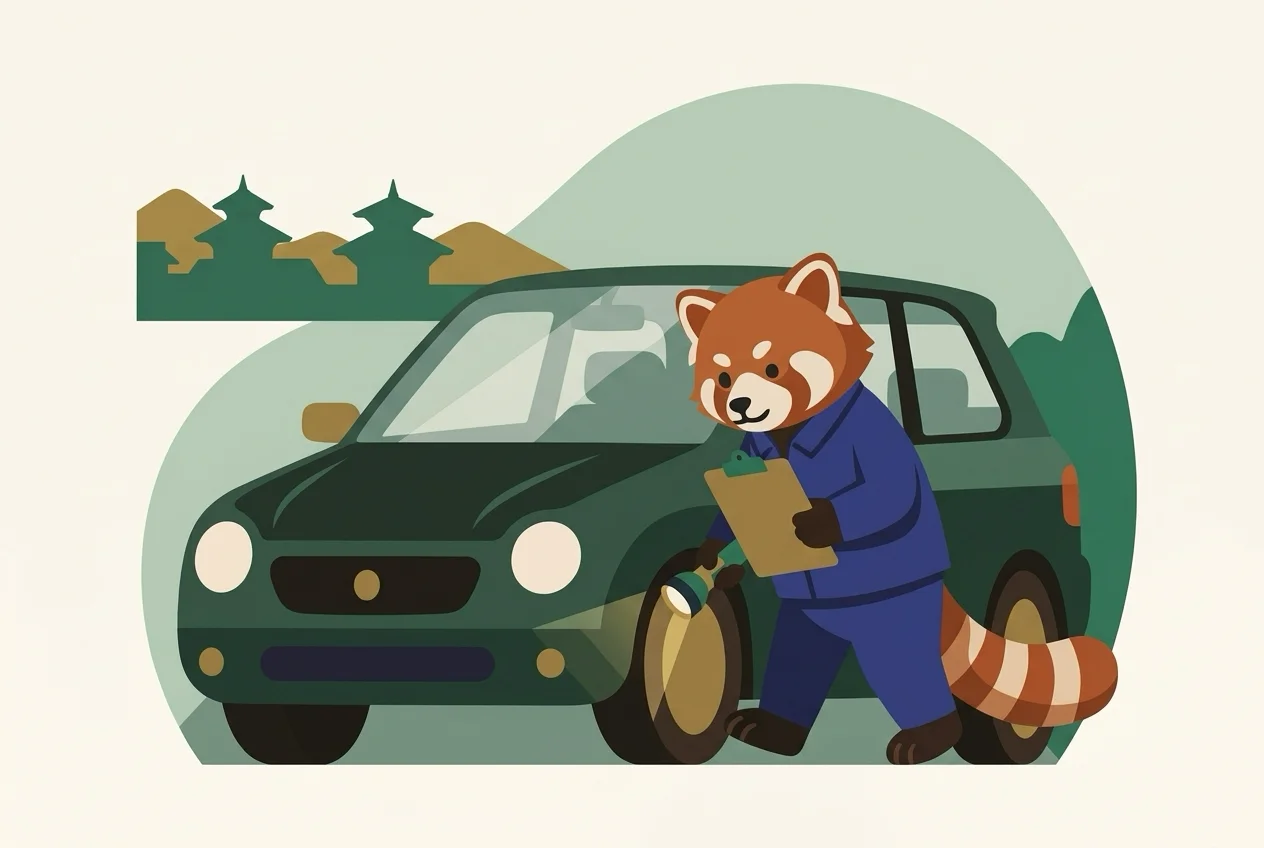
Look at what the car does when you try to start it:
- Slow, tired cranking, or a rapid clicking sound: the battery is low. Jump-starting will usually work.
- Dashboard lights and horn are dim or dead: battery is flat or a terminal has come loose.
- Lights are bright but the engine won't turn: it is more likely the starter motor or a connection, not the battery.
- Engine cranks normally but won't catch: this is a fuel or ignition problem, and a jump-start will not help.
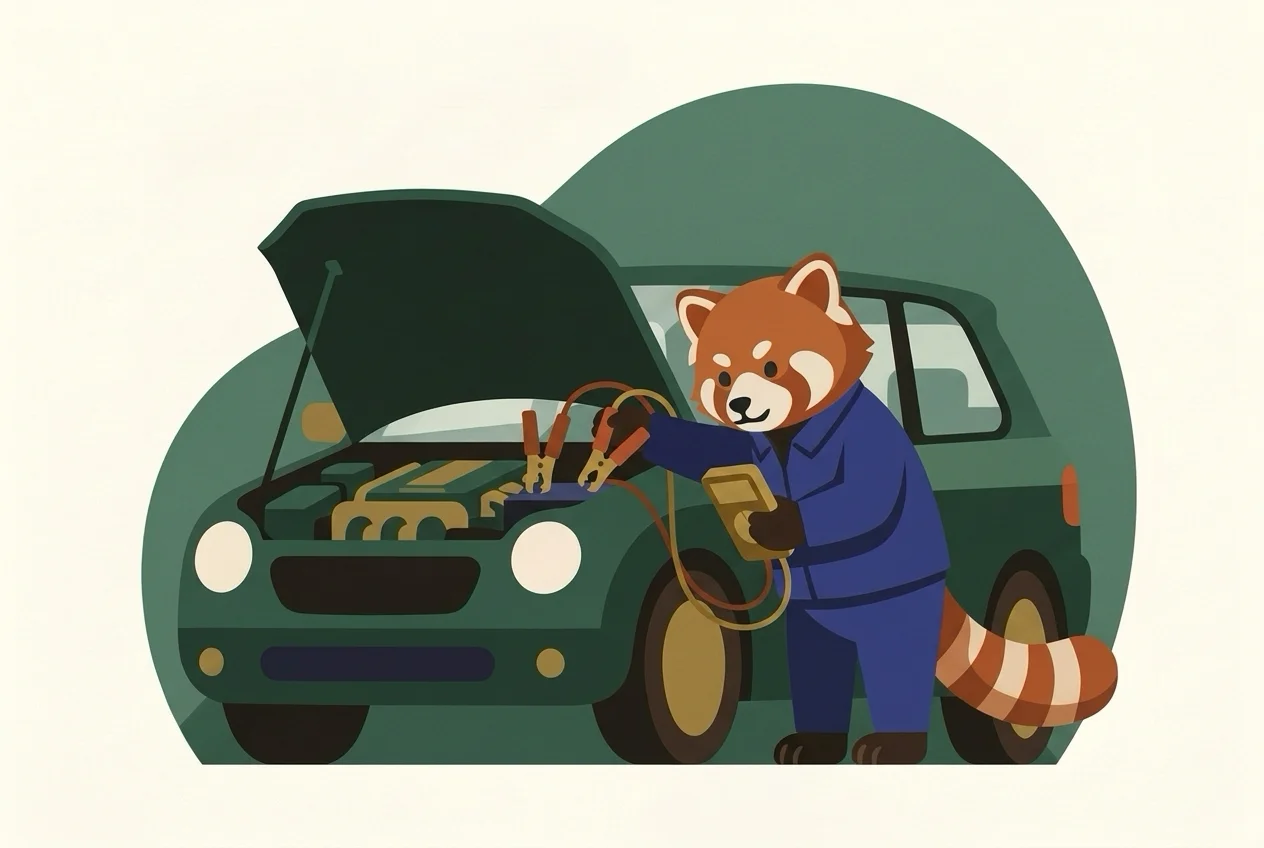
How to jump-start safely
You need a second vehicle with a healthy battery and a set of jumper cables that are thick enough for a car.
- Park the helper vehicle close, but not touching. Switch both engines and all accessories off.
- Connect red to the positive (+) terminal of the flat battery, then the other red clamp to the positive of the good battery.
- Connect black to the negative (–) of the good battery. Attach the last black clamp to bare metal on the engine block of the dead car, away from the battery.
- Start the helper car and let it run for a few minutes. Then start your car.
- Remove the cables in the reverse order. Keep your engine running for at least 20–30 minutes so the alternator can recharge the battery.
Signs the battery is near the end
- Age
- Most car batteries last roughly 3–5 years; older than that, expect trouble
- Slow crank
- Engine turns over slower each week, especially in winter
- Needs repeated jumps
- Dies again within a day or two of being jumped
- Swollen case
- Replace immediately, do not drive on it
If you jump the car and it dies again the next day, the battery is no longer holding charge, or the alternator is not charging it. A workshop can test both in a few minutes. Ask for a load test on the battery and a charging voltage check on the alternator before you buy a new battery you might not need.
When to call someone
If you are stuck in a basement, on a busy road, or you simply don't have cables or a second car, it is faster to have help come to you. On Najik you describe where you are, and a coordinator sends a provider with a jump pack or a new battery. You can arrange it for Kathmandu, Lalitpur and Bhaktapur, and you pay the provider directly after the work is done.
Get help where you are
Frequently asked questions
How long does a car battery last in Nepal?
Typically three to five years. Cold winters, short trips and poor-quality charging shorten that. If yours is over four years old and starting slowly, get it tested before it fails.
Can I drive straight after a jump-start?
Yes, and you should. Drive for at least 20–30 minutes without switching the engine off so the alternator can recharge the battery. If the car won't restart afterwards, the battery or alternator needs testing.
Will a jump-start damage my car?
Done correctly, no. Wrong cable order or touching the clamps together can damage electronics, which is why newer cars are better serviced by a professional.
Can someone come to my location to replace the battery?
Yes. Describe your location and the car model when you call; the provider brings a suitable battery or a jump pack.
Car won't start? Don't push it.
Tell us where you are and what the car is doing. A coordinator will send the nearest available provider.